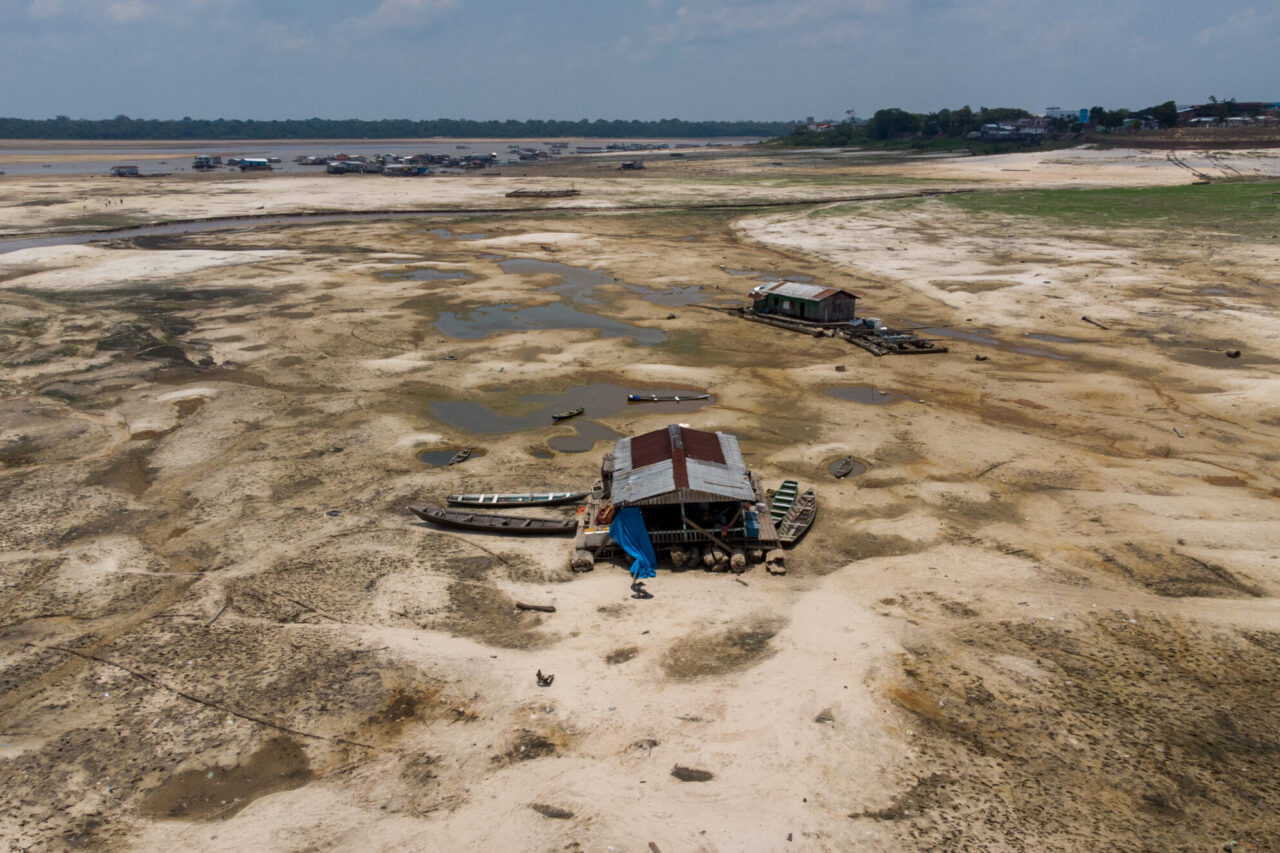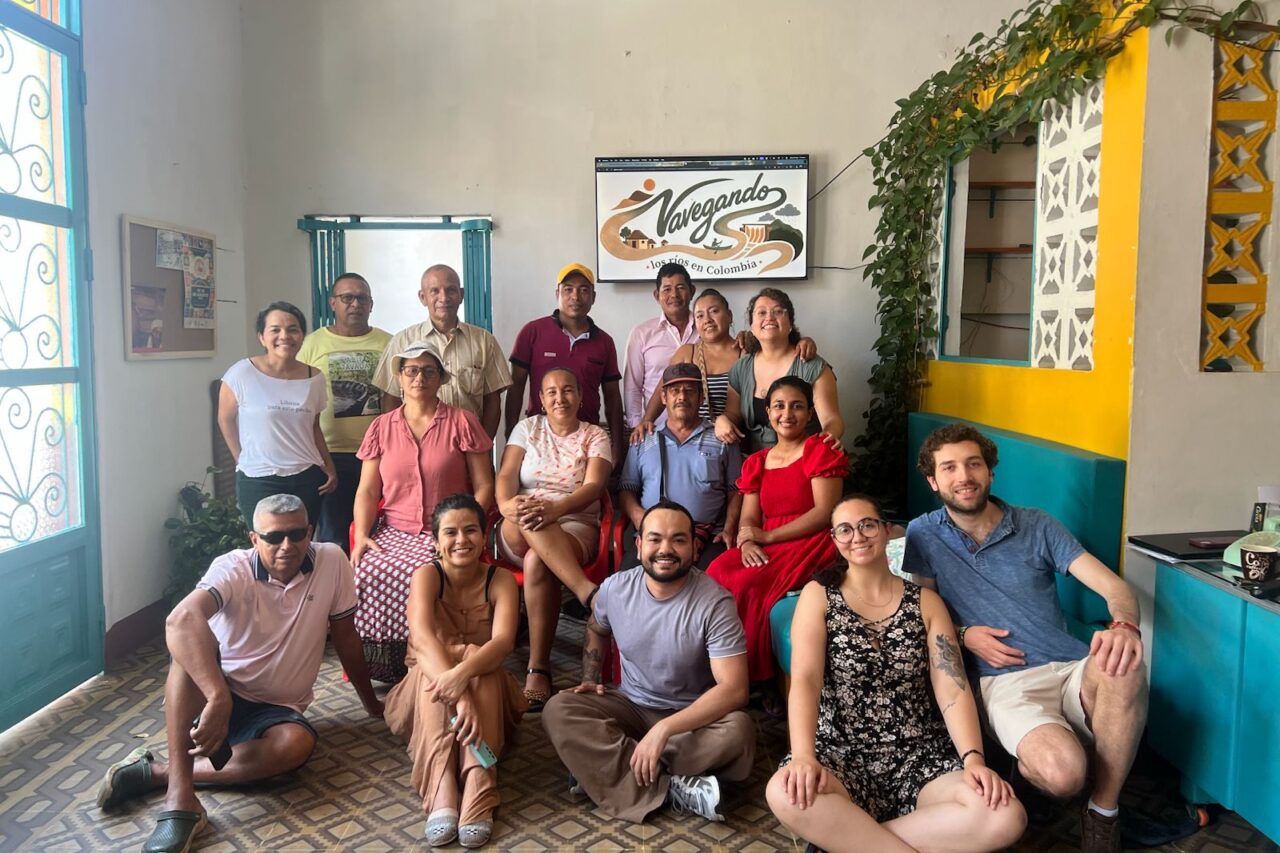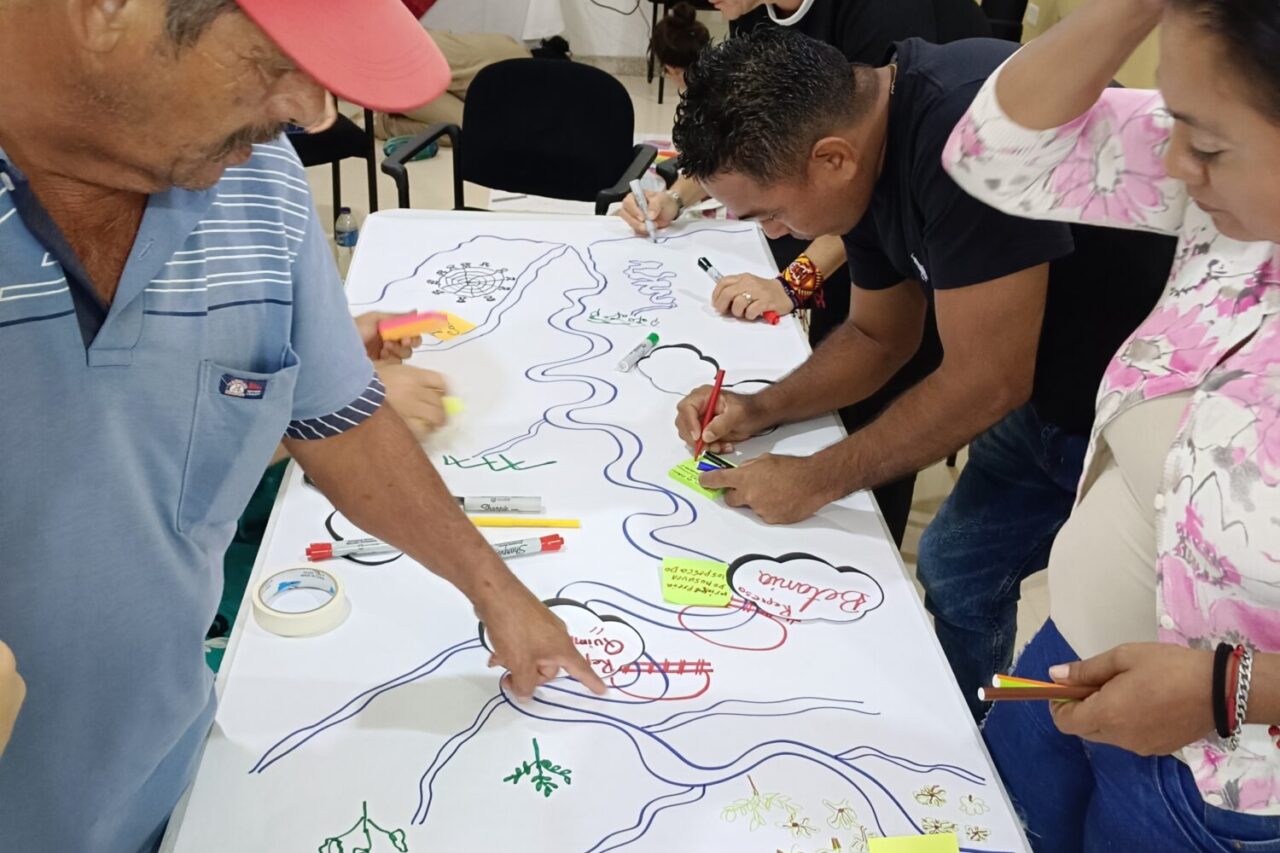


Falling river levels in the Amazon during severe and extreme droughts can affect different dimensions of the lives of the communities that depend on them: from food and income generation to mobility and access to essential services. It is in this context that the bulletin “Drought and Immobility Risk in the Amazon Basin” was jointly produced by IOM, the UN Migration Agency, Brasil’s National Centre for Monitoring and Early Warning of Natural Disasters (Cemaden) and researchers from Humboldt-Universität zu Berlin (IRI THESys, HU-Berlin), Universitat Autònoma de Barcelona (ICTA-UAB) and Universidade Federal de Minas Gerais (UFMG), with support from the Brazilian Research Network on Global Climate Change (Rede Clima). The bulletin identifies localities where falling river levels during the El Niño months may increase the risk of immobility.
The November 2026 edition inaugurates a series of monthly editions to be produced throughout the Amazonian dry season, with the aim of tracking how hydrological conditions evolve and their possible impacts on the mobility of Amazonian communities, and providing information that can support planning and decision-making by public managers and professionals working directly with vulnerable populations.
Amazonas concentrates localities prone to immobility
Of the municipalities analysed, São Gabriel da Cachoeira, in Amazonas, concentrates the largest number of localities prone to immobility: 343, of which 318 are indigenous. The municipality is followed by Lábrea, with 72 localities, Manicoré, with 68, Fonte Boa, with 66, and Atalaia do Norte, with 64. The analysis also identifies areas of concern in the states of Acre, Rondônia and Pará.
Complementing analyses that consider only the intensity of droughts, the bulletin seeks to identify where a prolonged fall in river levels may turn into a mobility problem for populations. For this purpose, localities are considered prone to immobility when they are simultaneously within five kilometres of rivers and floodable areas, more than five kilometres from roads, and in areas where river levels are forecast to remain below the historical pattern for prolonged periods. The analysis is based on data from 90 fluviometric stations.
The concept of involuntary immobility, used in the production of the bulletin, refers to situations in which people or communities cannot leave their place of origin or residence in the face of extreme weather events or other types of disaster.
As researchers Letícia S. Lima (HU Berlin and Wilson Fernandes explain, “The method we have developed, which is still being improved, makes it possible to infer in which regions the localities are found that, owing to their relative distances, are probably most dependent on navigation by rivers and wetlands, and where, in the month under analysis, water levels are forecast to be below what is expected for prolongued time. Over the coming months, we will work to refine these results, and we hope they can support decisions on assistance to the communities.”
Drought may affect mobility, agriculture and access to services
The bulletin also crosses the location of communities prone to immobility with the drought alerts for family farming produced by Cemaden. The combination makes it possible to identify areas where the effects of drought may strike agricultural production and mobility at the same time, which suggests a greater risk to food security.
The scenario gains relevance in view of the climate conditions forecast for the coming months. According to the El Niño Panel 2026–2027 there is a 95% probability of a very strong El Niño occurring in the October–November–December quarter. The phenomenon could rank among the most intense recorded since 1950.
The collaborating researchers seek to expand monitoring capacity and support institutional responses to the climate crisis in the region of the Amozon basin. Their initiative gives visibility to the vulnerable populations of the Amazon, especially the indigenous communities affected by the isolation and involuntary immobility caused by extreme droughts. By bringing together expertise in disaster anticipation and in impacts on family farming, the bulletin “Drought and Immobility Risk in the Amazon Basin” strengthens climate governance and provides inputs for preventive and humanitarian protection policies, reaffirming the commitment of science and human rights to the future of the Amazon.
Access the full bulletin here. Further information in Portuguese is to be found the website https://monitor-amazonia.ehr.ufmg.br/ where updates of the bulletin will be published, too.