Back to the (1.5°C) Future: The Potential and Challenges of Carbon Removal
The lecture will be delivered in German (Title: Zurück in die (1,5 °C) Zukunft: Potentiale und Herausforderungen von CO₂-Entnahmen)
02.06.2026, 18.00-19.30
HU Berlin, Unter den Linden 6, Senatssaal
In 2024, a temperature rise of 1.5 °C above pre-industrial levels was recorded for the first time. We are therefore on the verge of failing to meet the goals of the Paris Climate Agreement. Atmospheric carbon dioxide removal (CDR) is therefore becoming increasingly essential to limit such an “overshoot” or to return to 1.5 °C after an (ideally brief) overshoot.
What is the current state of research on carbon management- what implications does overshoot have, in particular, for the (economic, technical, environmental, and social) challenges of scaling up carbon dioxide removal (CDR)? What are the geographical differences? What equity issues arise in this context? What might financing look like in times of geopolitical uncertainty?
Without claiming to provide definitive answers to all these questions, the aim is to foster an understanding of this debate, which is at times highly fragmented. In doing so, we may also raise important new questions that help us take a step forward in climate protection.
Prof. Dr. Sabine Fuss is a department head at the Potsdam Institute for Climate Impact Research (PIK), where she also leads a research group on sustainable carbon management. She holds a professorship in Sustainable Resource Management and Global Change at the Department of Geography at Humboldt University in Berlin.
Her lecture will be moderated by Dr. Stefan Schäfer, research group leader at the Research Institute for Sustainability- Helmholtz Centre Potsdam and fellow at Harvard University and the University of Oxford.
About the lecture series
The KOSMOS-Lesungen are in the tradition of one of the most famous lecture series in the German history of science: Alexander von Humboldt’s Kosmos lectures. Around 200 years ago, the natural scientist spanned the entire world and all disciplines of science. Today’s KOSMOS lectures are dedicated to the challenging transformation processes in the age of the Anthropocene.
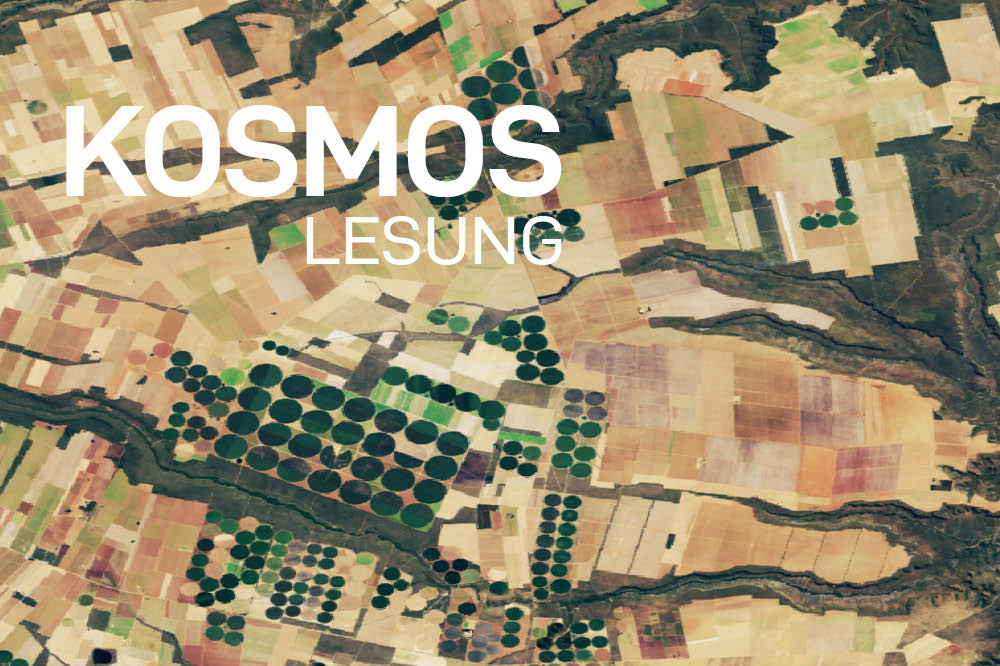
Photo credits: NASA Earth Observatory