Research
Researchers at IRI THESys have joined forces in different working groups to exchange ideas, concepts and case studies on cross-cutting topics – such as decolonization, mining or modeling. The working groups below showcase running initiatives mainly created, developed and organised by doctoral and postdoctoral researchers.
Geomodalities Working Group:
Multimodal Approaches to Human–Environment Relations Across Scales

Geomodalities is an experimental space at IRI THESys for thinking and working with human–environment relations across scales. We start from a simple idea: every map, satellite image, sensor dataset, walk, or story is not just a neutral representation, but a way of composing the world. We use the term Geomodalities to name these different modes of sensing, registering, and intervening in environmental realities.
Our interests range from remote sensing and geospatial data to ethnographic fieldwork, collaborative mapping, soundwalks, zines, and small exhibitions. We are especially attentive to the ethical and political stakes of geodata: questions of visibility and invisibility, data justice, refusals, and the risks of surveillance in environmental governance. This necessarily brings a transdisciplinary sensibility that can help us continue expanding the possibilities of geomodal interventions, while advancing a research agenda in the service of community action and their political demands.
The working group, in this sense, has three main aims:
- Advance a disciplinary bridge between anthropology and geography by developing a shared conceptual and methodological vocabulary that brings ethnographic approaches into conversation with remote sensing and other geospatial techniques.
- Experiment with explicitly multimodal research and communication formats, treating the group as a lab for prototyping geomodal methods (e.g., collective atlases, annotated datasets, soundwalks, zines, small exhibitions, and digital/physical maps).
- Foster ethical–political reflection on the use of satellite imagery and geodata, including questions of data justice, visibility/invisibility, refusal, and the risks of environmental surveillance.
The group meets monthly in a hybrid format and operates as a combination of a reading group and a methods lab. Sessions may involve discussing texts, sharing work-in-progress (thesis chapters, mapping experiments, datasets, visual materials), or collectively prototyping geomodal methods and formats (atlases, field guides, multimodal outputs). Our aim is to build a common vocabulary between anthropology, geography, and related fields, and to create a hospitable space where people can test ideas at an early stage.
New members from any institution and discipline are welcome—whether you already work with maps and satellite images or are just curious about how different media and methods shape human–environment research. If you’re interested in joining or presenting something, just get in touch and tell us briefly who you are, what you’re working on, and how it might connect to Geomodalities.
Energy Working Group
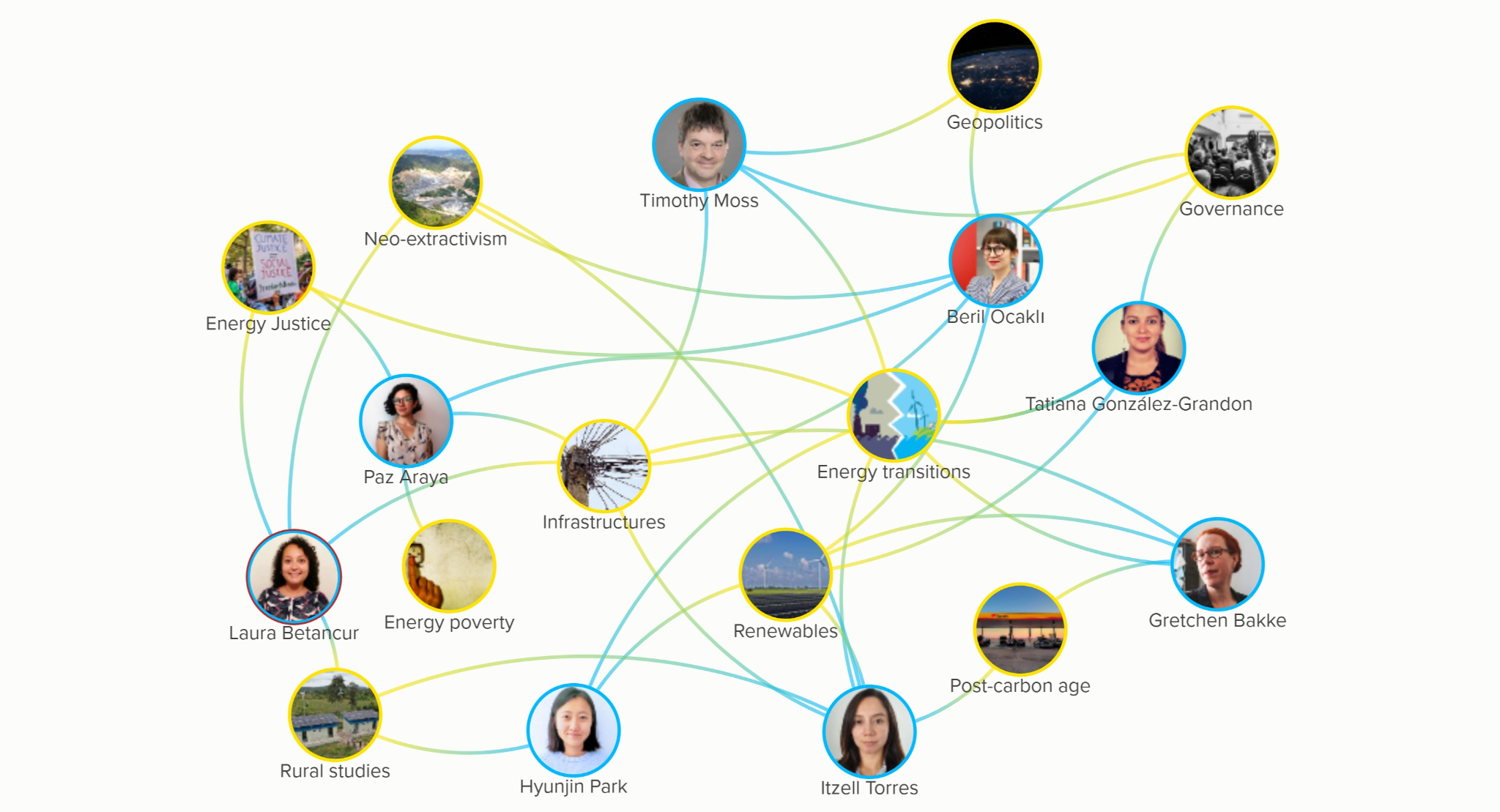
We are an interdisciplinary group of researchers from a variety of disciplines, with a common interest in exploring energy politics, infrastructures, and transitions in both the Global North and South. Our approach to studying energy infrastructures is unique in that we don’t simply view them as static material constructs; rather, we recognize them as processes ingrained in and paramount to complex socio-ecological, socio-technical and socio-cultural systems. By focusing on these dynamic processes, we aim to gain a deeper understanding of the ways in which energy systems shape and are shaped by human-environment relations.
Our group is made up of a diverse range of scholars from fields such as geography, anthropology, mathematics, economics, history, and beyond. Our collective goal is to engage in meaningful discussions surrounding a variety of pressing topics related to energy, including energy poverty, the geopolitics of energy, the intersection of energy and nature, energy infrastructures, and rural energy transition. By exploring the interconnections between these subjects from various analytical perspectives, we strive to gain a more holistic understanding of the complex systems at play. Our group regularly employs various discussion methods to facilitate open and productive conversations, including dialogues for providing feedback on works in progress, reading groups for discussing relevant texts and inviting expert speakers to share their insights with the group.
Group members: Paz Araya, Gretchen Bakke, Laura Bentacur, Milena Bister, Cristian Flores, Tatiana Gonzales-Grandon, Samir Harb, Timothy Moss, Beril Ocakli, Hyunjin Park, Lea Maria Sasse, Itzell Torres (alphabetically ordered)
Infrastructures and Transformations Working Group
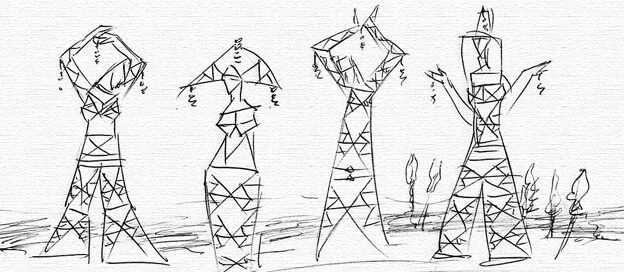
Infrastructures represent a paradox. They underpin our healthy, connected communal existence yet – being designed also to facilitate economic development through growth – they have been instrumental in generating socio-ecologically exploitative regimes of production and consumption. How to reconfigure these hubs of human-environment relations to render them more environmentally sustainable, socially inclusive and politically accountable is core to our engagements in the group “Infrastructures and Transformations” at IRI THESys.
What we are particularly interested in:
Temporalities of infrastructures, infrastructures and extractivism, intersectoral coupling, geopolitics and multiscalarity of infrastructure, (ir-)reversibilities of infrastructure, repurposing infrastructures, infrastructural (in)securities and violence.
What we do together:
- Debate inspiring/irritating texts
- Discuss our own work in progress (publications, proposals, essays)
- Exchange with external researchers
- Visit infrastructure sites and people to generate novel ideas
What we hope to do in future:
- Help people transform infrastructures
- Identify modes of collective influence on infrastructure policy
- Engage with critical practitioners of infrastructure
- Enrich academic reflexivity through such exchanges
Group members: Rossella Alba, Gretchen Bakke, Milena Bister, Sandra Jasper, Bettina König, Timothy Moss, Beril Ocaklı
If you are a PhD scholar, PostDoc or senior researcher at IRI THESys and would like to join the group, please get in touch with .
Photo credits: Elena Paroucheva (Creative Commons)