Whose knowledge counts when we talk about river transformations? Why do riverine communities often lack access to research findings they helped produce? And how can lived experience with rivers be recognized as relevant knowledge for water governance?
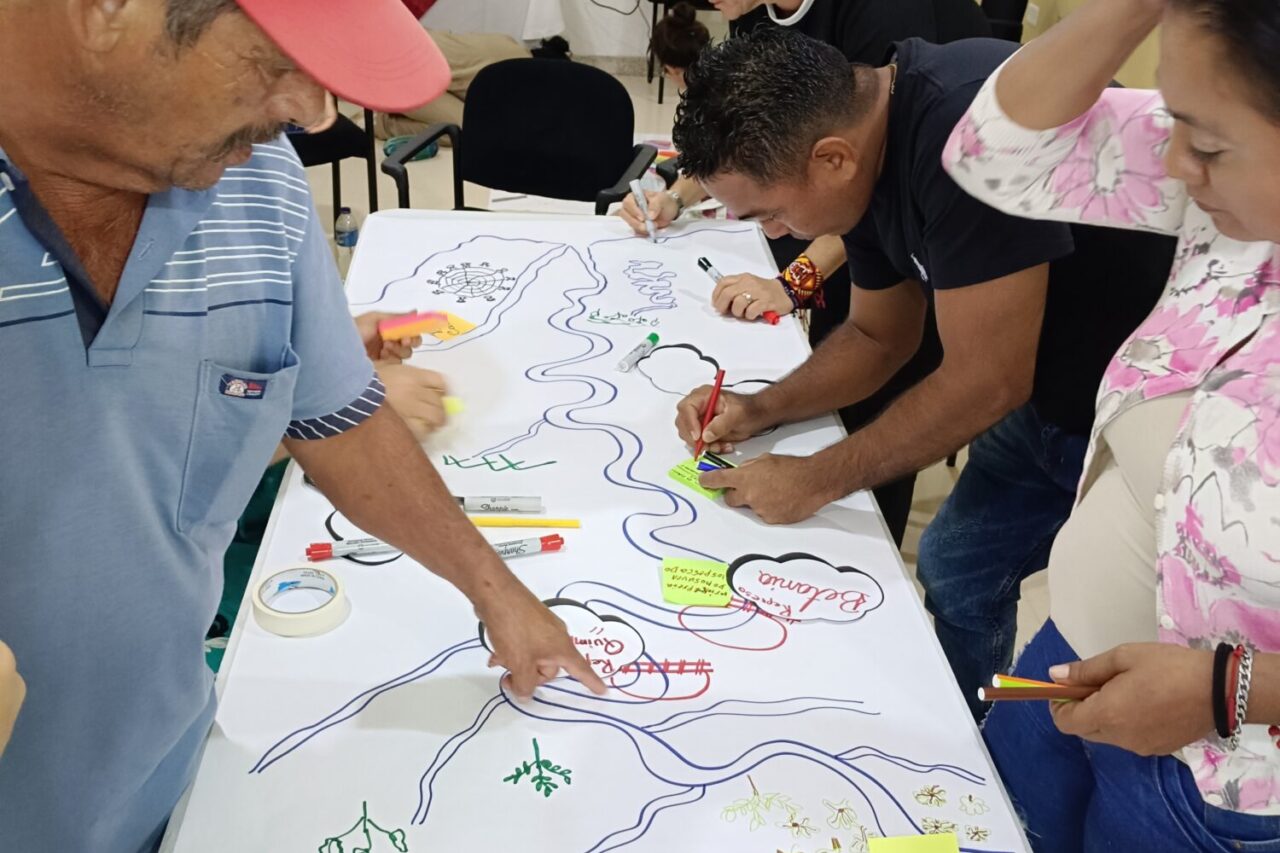
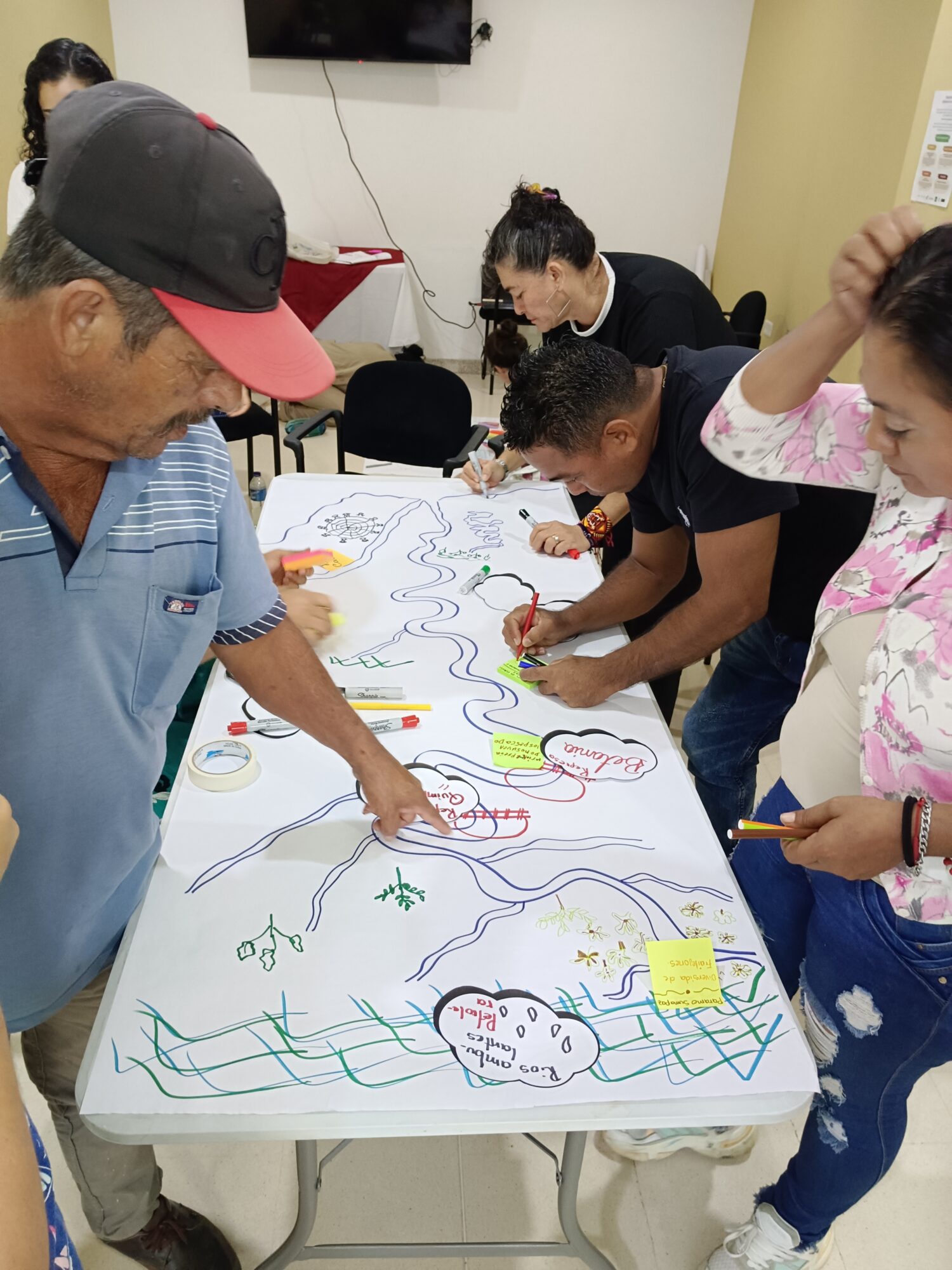
These were some of the questions that emerged during the first Transdisciplinary Editorial Laboratory (TELab), an exchange space that brought together riverine leaders, researchers, and communication professionals. The TELab marked the beginning of Navigating Colombian Rivers with WhatsApp, a project that brings scientific findings and riverine knowledge into conversation to co-create multimedia stories designed for mobile formats.
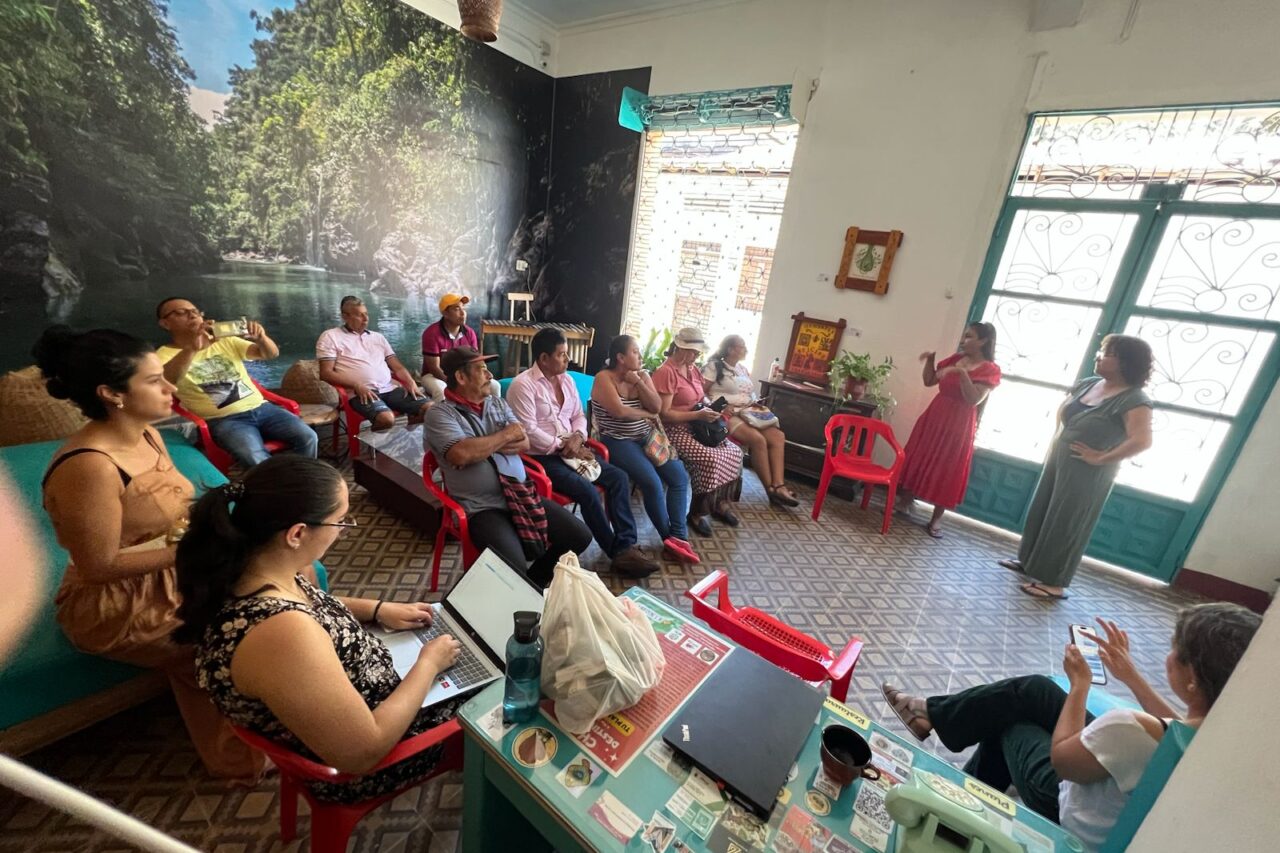
Between November 12 and 14, 2025, seven experienced riverine leaders from across the Magdalena–Cauca basin met with the project team in Barrancabermeja. Together, they discussed findings from the project Water Security for Whom? on the impacts of hydropower dam operations. From there, the conversation quickly expanded beyond hydropower to include the leaders’ own perspectives on the wider transformations taking place across their rivers and territories.
These exchanges became the starting point for another question: how can these different forms of knowledge be turned into culturally grounded stories that can circulate through WhatsApp and other everyday communication networks?
The TELab took place in Barrancabermeja, Colombia’s main oil-refining hub and a city with a long riverine history. Its wetlands and riverine areas are also affected by fluctuations in streamflow downstream of the Hidrosogamoso Dam, which supplies approximately 8% of Colombia’s electricity demand. More broadly, the Magdalena–Cauca basin accounts for around 70% of the country’s hydropower generation and a substantial share of national GDP.
Lessons from the Sogamoso: Living, Learning, and Governing an Electrified River
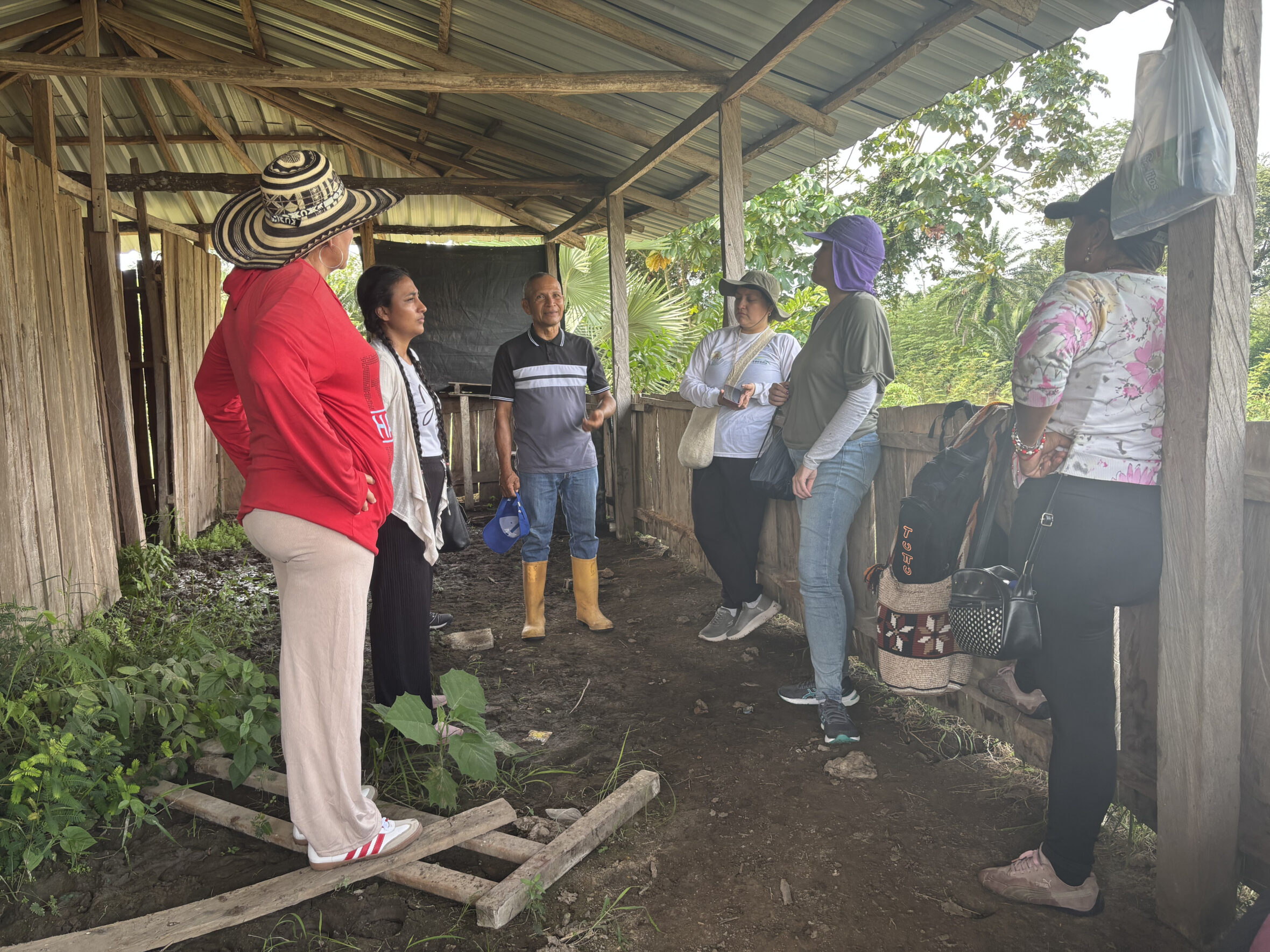
Taking advantage of Barrancabermeja’s proximity to the river, the TELab included visits to communities along the lower Sogamoso. These encounters offered participants a closer look at how local communities have engaged in dialogue and negotiation with the hydropower company and how daily life has changed since the river became increasingly shaped by energy infrastructure.
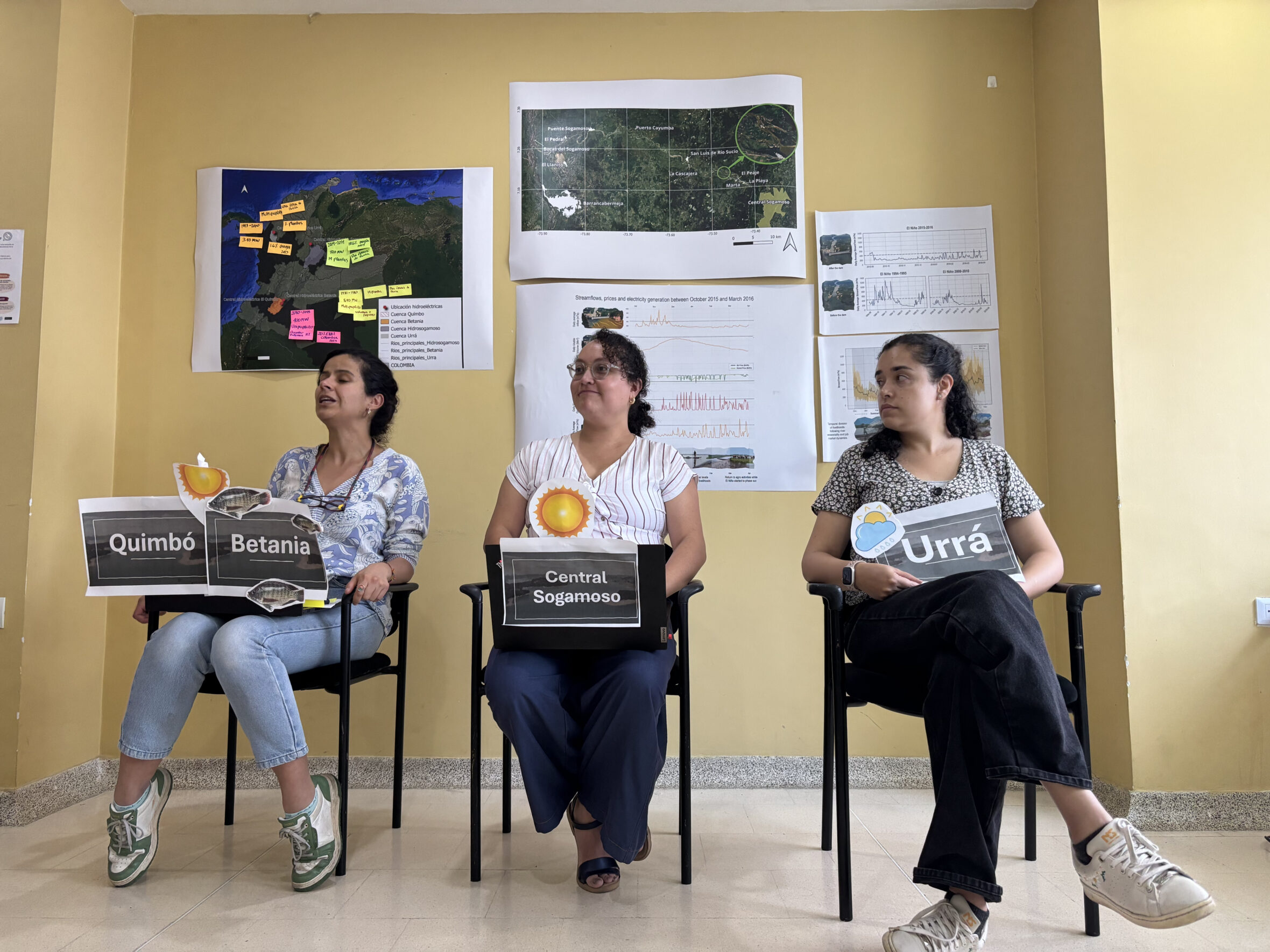
The project team also used short theatrical exercises and other educational formats to explore how Colombia’s electricity market works and how decisions within that system can affect the flows of dammed rivers.
The idea behind this two-way exchange was not to arrive at a single interpretation, but to create room for different forms of knowledge to meet, including the tensions, agreements, and disagreements that come with them. Participants emphasized that local testimonies offer irreplaceable insights into what it means to live along an electrified river and into the ways hydropower reshapes riverine cultures and everyday practices.
The conversation also moved beyond hydropower. As the Magdalena–Cauca basin undergoes rapid transformations, riverine leaders stressed that their knowledge is essential for navigating the relationship between long-standing traditions and new climatic, technological, and political realities.
In this context, Jully Mora, a riverine leader from the Corporación Mesa de Pesca del río Sogamoso, proposed the notion of “new ancestors” as a way of thinking about the place her generation of riverine leaders occupies amid the transformation of riverine territories:
“We are the sandwich generation, the one that has the knowledge passed down by our grandparents, but we are also the generation that has had to learn, and will continue to learn, how that river works now.”
Her words echoed a broader concern that ran throughout the workshop: how to adapt to, coexist with, and defend a river increasingly shaped by infrastructure and development, while keeping riverine knowledge alive for future generations.
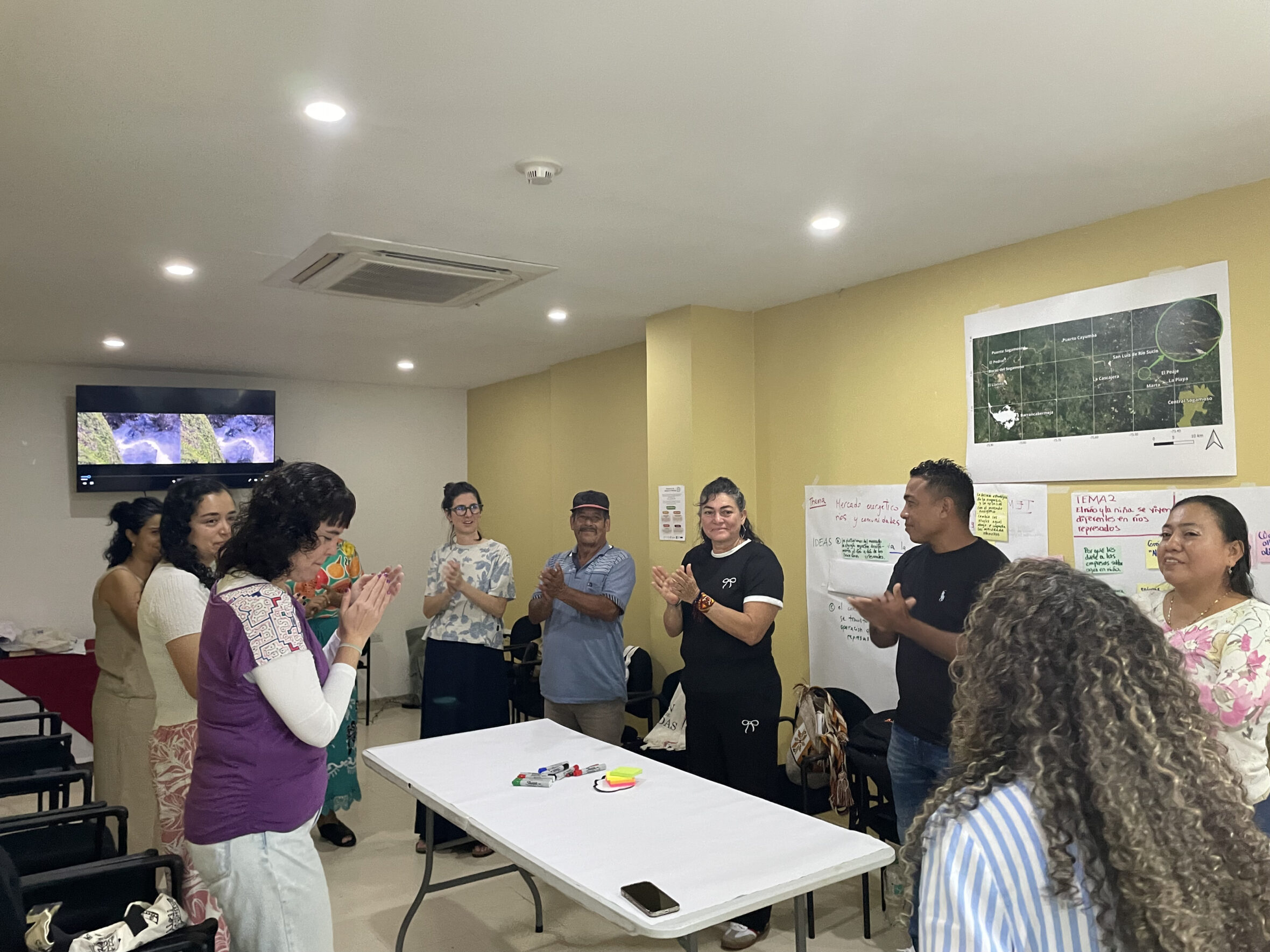
The TELab also marked a first step toward strengthening a network of riverine leaders who would later play an important role in shaping and circulating the multimedia stories produced by the project.
A second TELab took place in Honda in May 2026. Riverine leaders and the project team met again to review the multimedia pieces that had emerged from the first conversations, discuss how the stories represented different territories and experiences, and continue developing the content before its wider circulation through messaging networks and community spaces.
The eight multimedia pieces developed throughout the project —animated videos, comics, and micro-podcasts— are now available in the Navigating Colombian Rivers with WhatsApp repository.
Explore the project content:
Project coordination: Laura Betancur Alarcón
Principal Investigator: Prof. Dr. Tobias Krüger
Co-Principal Investigator: Prof. Dr. Rossella Alba
Community partner: Jully Mora (fishing leader from the Lower Sogamoso River Basin).
Academic advisors: Camila Jiménez Sáenz and Laura Pulgarín Morales (Pontificia Universidad Javeriana); Prof. Dr. Denisse Roca-Servat (INER, Universidad de Antioquia).
Communication and creative storytelling specialists: Prof. Dr. Ginna Morelo and Mg. Daniel Morelo, EntreRíos Museo.
Research assistants: Matthias Zarama Giedion (HU Berlin) and Kimberly Alejandra Valencia Cardona (INER, Universidad de Antioquia).
Partner institutions and organizations:
- IRI THESys, Humboldt-Universität zu Berlin (Germany)
- Helmholtz Institute for Functional Marine Biodiversity (HIFMB) (Germany)
- Institute of Regional Studies (INER), Universidad de Antioquia (Colombia)
- EntreRíos Museo (Colombia)
- Fishing collectives and associations in the Magdalena–Cauca basin
This project is funded by the Volkswagen Foundation through its ‘Additional Funding for Science Communication’ program.